A Review on Structure-Based Drug Design and Its Role in Modern Medicinal Chemistry
DOI:
https://doi.org/10.64062/IJPCAT.Vol2.Issue3.5Keywords:
- Structure-Based Drug Design (SBDD), Molecular Docking, Preclinical Studies, Animal Models, Drug Discovery, Lead Optimization, Computational Biology, Medicinal Chemistry
Abstract
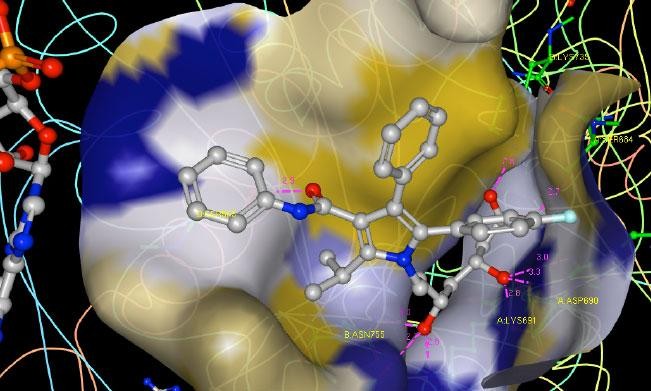
The Structure-Based Drug Design (SBDD) has become one of the most sophisticated and rational methods of modern medicinal chemistry, profoundly changing the conventional process of drug discovery by applying the detailed 3D structural knowledge of biological targets, enzymes, receptors and ion channels. This review gives an in-depth review of the principles, methodologies and preclinical applications of SBDD with special interest in animals. It also emphasizes the combination of major computational methodologies, such as molecular docking, virtual screening, and molecular dynamics simulations, and experimental methods, such as X-ray crystallography and cryo-electron microscopy that, together, provide efficient prediction and analysis of drug-target interactions on a molecular scale. The animal models are considered vital in verifying the pharmacokinetics, pharmacodynamics, efficacy, and safety of SBDD-derived compounds, thus sealing the gap between the theoretical design and biological systems. Moreover, the review covers key drug development milestones, such as target identification, lead compound discovery, and optimization, and successful uses of SBDD in disease models, such as cancer, neurological disorders, infectious diseases, and inflammatory diseases. Although its benefits are significant (greater drug specificity, decreased development time, and higher success rates), SBDD has several issues connected with relying on high-resolution structural data, high implementation costs, and difficulties in the translation of computational predictions into in vivo results.
References
Downloads
Published
Issue
Section
License
Copyright (c) 2026 This is an Open Access article distributed under the terms of the Creative Commons Attribution (CC BY NC), which permits unrestricted use, distribution, and reproduction in any medium, as long as the original authors and source are cited. No permission is required from the authors or the publishers. (https://creativecommons.org/licenses/by-nc/4.0/)

This work is licensed under a Creative Commons Attribution 4.0 International License.